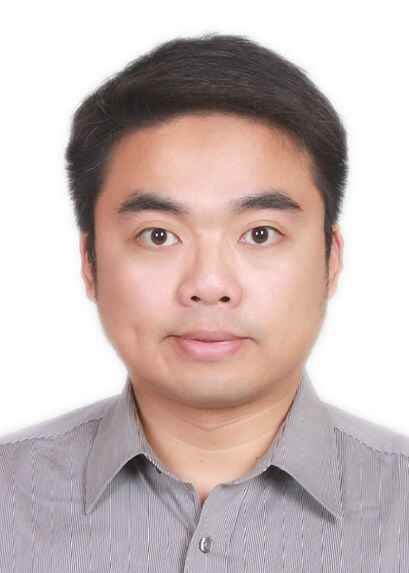
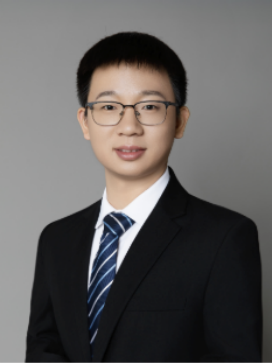
| Prof. Gary G. YenIEEE/IET/IAPR Fellow,Sichuan University, ChinaBIO: Gary G. Yen joined the School of Computer Science at Sichuan University as a full-time faculty member in 2025. Prior to this appointment, he served as a Regents Professor in the School of Electrical and Computer Engineering at Oklahoma State University (OSU), USA. He received his Ph.D. in Electrical and Computer Engineering from the University of Notre Dame in 1992. In terms of academic service, Prof. Yen served as Vice President for Technical Activities of the IEEE Computational Intelligence Society (CIS) from 2004 to 2005, Founding Editor-in-Chief of the IEEE Computational Intelligence Magazine from 2006 to 2009, and President of the IEEE CIS from 2010 to 2011. He has recently been elected as a Distinguished Lecturer for the 2026–2028 term. He was the recipient of the Regents Distinguished Research Award from OSU in 2009 and the Andrew P. Sage Best Transactions Paper Award from the IEEE Systems, Man, and Cybernetics Society in 2011. Furthermore, he served as Chair of the IEEE CIS Awards Committee during the 2008–2009, 2014–2015, and 2018–2019 terms, and as Chair of the IEEE CIS Fellow Evaluation Committee in 2016–2017, 2020–2021, and 2023. Prof. Yen is currently a Fellow of the IEEE, IET, and IAPR. Chairman, Fundamental Research Platform for Major Disease Prevention and Treatment of Traditional Chinese Medicine, China Association of Traditional Chinese Medicine Group Leader, Smart Traditional Chinese Medicine, Medical Artificial Intelligence Association, Chinese Society of Biomedical Engineering. |
| Prof. Zechao LiNanjing University of Science and Technology, ChinaBIO: Zechao Li is currently a Professor at the Nanjing University of Science and Technology. He received the Bachelor’s degree from University of Science and Technology of China(USTC) in 2008 and the Doctor degree from National Laboratory of Pattern Recognition (NLPR), Institute of Automation, Chinese Academy of Sciences in 2013. He has authored over 60 papers in top-tier journals and conferences. His research interests include multimedia analysis and computer vision. He was a recipient of the Best Paper Award in ACM MM in Asia 2020 and the Best Student Paper Award in ICIMCS 2018. He has served as an Associate Editor for IEEE TNNLS. |
| Prof. Qingdu LiUniversity of Shanghai for Science and Technology, Zhongyu Embodied AI Laboratory, ChinaBIO: Shanghai Oriental Scholar Distinguished Professor and Shanghai Pujiang Talent; Executive Director of Zhongyu Embodied AI Laboratory; concurrently Honorary Director of the Robotics Professional Committee and President of the Embodied Intelligence Professional Committee of the Henan Artificial Intelligence Association. He has been selected for the Stanford University Top 2% Scientists List and the Elsevier China Highly Cited Researchers List. He has worked in bionic intelligent robotics and complex system control for over two decades. He received his master’s and doctoral degrees from Chongqing University of Posts and Telecommunications and Huazhong University of Science and Technology, respectively, and pursued research at leading institutions including Cornell University in the United States and the University of Hamburg in Germany. His long-term research focuses on core control of humanoid robots, intelligent rehabilitation equipment, and complex system dynamics. He has published over 70 SCI journal papers with more than 1,500 citations, including 2 ESI Highly Cited Papers and 1 ESI Hot Paper, and more than 20 core papers in the past five years. He is the author of the academic monograph Principles and Control of Dynamic Walking for Biped Robots, and holds more than 20 national invention patents and 3 software copyrights. He has served as Principal Investigator for 3 National Natural Science Foundation of China projects and as a key researcher on more than 20 national and provincial/ministerial projects. His honors include the Chongqing Natural Science Award and the China Overseas Chinese Contribution Award. His team has achieved significant results in technology development and industrialization, overcoming core technical bottlenecks in robot long-endurance operation and safety control. The quadruped robot “Xingzhe No. 1” developed by his team set a Guinness World Record for the furthest distance covered by a quadruped robot, walking 134.03 kilometers, and was featured by CCTV. He has developed the internationally advanced “Xiaobei” series of biped humanoid robots and led the development of the “Xingzhe No. 2” humanoid robot, achieving small-batch production and commercialization of humanoid robots and promoting their large-scale commercialization in scenarios such as cultural tourism, rehabilitation and elderly care, and home services. He is a leading scholar in industry–academia–research integration in the field of embodied intelligent robotics in China. |
| Prof. Yue WuXidian University, ChinaBIO: Yue Wu, Professor, Ph.D. Supervisor at the School of Computer Science and Technology, Xidian University, Shaanxi Youth Science and Technology New Star, IEEE/CCF/CAAI Senior Member, Secretary-General of the CAAI Youth Committee, Executive Member of CCF Xi’an, Chair of CCF YOCSEF Xi’an, Secretary-General of CCF Xi’an Branch. His research interests include computational intelligence and 3D computer vision. He received the B.Eng. and Ph.D. degrees from Xidian University, Xi’an, China, in 2011 and 2016, respectively. He is currently a Professor with Xidian University and the deputy director of the Key Laboratory of Collaborative Intelligent Systems of the Ministry of Education. He has published over 50 papers as the first/corresponding author in SCI A1 or CCF-A journals/conference, and 12 papers have been selected as ESI highly cited papers, which have been cited over 5,300 times. He is selected for Stanford University Top 2% Scientists List (2022-2025). He has applied and authorized over 50 patents. He is leading or has completed more than 20 projects as the principal investigator, including National Natural Science Foundation of China (Key Program, General Program, Youth Program), Natural Science Basic Research Program of Shaanxi (General Program, Youth Program), China Postdoctoral Foundation (Special Foundation, General Program), SAST Fund, and the CAAI-Huawei MindSpore Academic Fund. He has won over 10 academic awards as the first principal investigator, including Second Prize for Science and Technology Award of Shaanxi Province, Outstanding Youth Award of Wu Wenjun AI Science & Technology, Youth Science and Technology Star of Shaanxi Province, and Huawei Spark Award. He serves as the Secretary-General of the Youth Committee of the CAAI, the Chair of CCF YOCSEF Xi’an, and the Secretary-General of the CCF Xi’an Branch. He is also the Associate Editor for IEEE Transactions on Evolutionary Computation, Expert Systems with Applications, IEEE Transactions on Emerging Topics in Computational Intelligence, and the Editorial Board Member for CAAI Transactions on Intelligence Technology and Frontiers of Computer Science. |
| Prof. Wentao MaoHenan Normal University, ChinaBIO: Wentao Mao is Professor and Pingyuan Scholar at the School of Computer and Information Engineering, Henan Normal University, China. He also served as Adjunct Supervisor for Master of Engineering candidates in Safety Engineering at Tsinghua University. He received a master’s degree in computer applications from Chongqing University of Posts and Telecommunications in 2006, and a doctoral degree in aerospace engineering from Xi'an Jiaotong University in 2011. Dr. Mao completed postdoctoral research in mechanics and civil engineering at Northwestern Polytechnical University, with his postdoctoral work featured in the China Postdoctoral Science Foundation Selected Grantees. He has held visiting appointments at the Department of Mechanical Engineering, University of Alberta, Canada, and the Department of Computer Science, Brunel University London, UK. Dr. Mao's research focuses on industrial big data, remaining useful life prediction, intelligent fault diagnosis, and degradation modeling for complex systems. He has published over 80 research papers in leading international journals, such as IEEE Transactions on Industrial Informatics, IEEE Transactions on Reliability, Reliability Engineering and System Safety, Mechanical Systems and Signal Processing, and IEEE/CAA Journal of Automatica Sinica. His scholarly work includes 26 top-tier journal articles, one ESI Hot Paper, and eight ESI Highly Cited Papers, with an h-index of 31. He has authored two scholarly monographs published by Science Press and served as chief editor for two provincial planned textbooks. He has served as Principal Investigator for three National Natural Science Foundation of China grants, two China Postdoctoral Science Foundation grants, and more than 20 provincial and industry-sponsored projects. His honors include the Henan Natural Science Award (2024), the Henan Higher Education Teaching Achievement Award (2016), and the title of Academic and Technical Leader of the Henan Provincial Department of Education (2025). He was also recognized multiple times as an Outstanding Master's Thesis Supervisor of Henan Province between 2021 and 2026. Dr. Mao is a Senior Member of the China Computer Federation and serves on the Industrial Big Data Committee of the Chinese Mechanical Engineering Society. |
| Prof.Ge ShiBeijing Institute of Technology, ChinaBIO: Ge Shi is a Research Fellow and Doctoral Supervisor at the Zhengzhou Research Institute, Beijing Institute of Technology. His research primarily focuses on Large Model Agents and AI for Healthcare. He has published over 60 papers in top-tier international journals and conferences,including ACL, TOIS, and Nature portfolio journals,and has authored one academic monograph. He has served as Principal Investigator for numerous research projects, including a sub-project of the National Science and Technology Major Project on Next-Generation Artificial Intelligence, grants from the National Natural Science Foundation of China (NSFC), and the Foundation Strengthening Program. His honors include first-place in evaluation competitions at ACL and NLPCC, the Best Paper Award at IMLIP, and the First-Class Teaching Incentive Program Award from the Chinese Association for Artificial Intelligence (CAAI). He also regularly serves as an Area Chair for leading international conferences such as ACL and COLING. |